
ADOC Search Is Current Only
The most important ADOC fact is the scope limit. The ADOC inmate search says the public database contains currently incarcerated inmates and that historical data is not available online. A released state-prison inmate may return no public search result even when the person served an Alabama sentence. That no-result state should lead to records, court, VNS, or ABPP checks, not a conclusion that no state custody ever existed.
For Sumter County, this distinction keeps county jail releases separate from state prison custody. A person released from the Sumter County Jail to ADOC has left county custody, but has not been discharged to the community. ADOC becomes the state custody source until release, mandatory release, parole, or discharge.
| ADOC path | Use it for |
|---|---|
| Public inmate search | Current ADOC custody only |
| Central Records | Existing state prison release or discharge records |
| Public Records form | Written request for releasable ADOC records |
| ABPP and VNS | Supervision or notification events after state custody |
Request ADOC Release Records
ADOC release confirmation for a person no longer in public search usually runs through the written public-record process. The ADOC contact page lists public.records@doc.alabama.gov for public-record questions, Central Records at 1-334-353-9738, and the main number at 1-334-353-3883. Form 23-A and Administrative Regulation 023 govern submission and fees.
- Identify the person by full name, date of birth, AIS number if known, and Sumter County court case details if available.
- Ask for an existing release, discharge, central-record, time-sheet, or sentence-calculation record instead of a new summary.
- Use the ADOC public-record form and follow the current mailing, hand-delivery, or email instructions.
- Confirm the current processing fee and production costs before sending payment.
The ADOC contact and public-records page is the best source for current submission details.
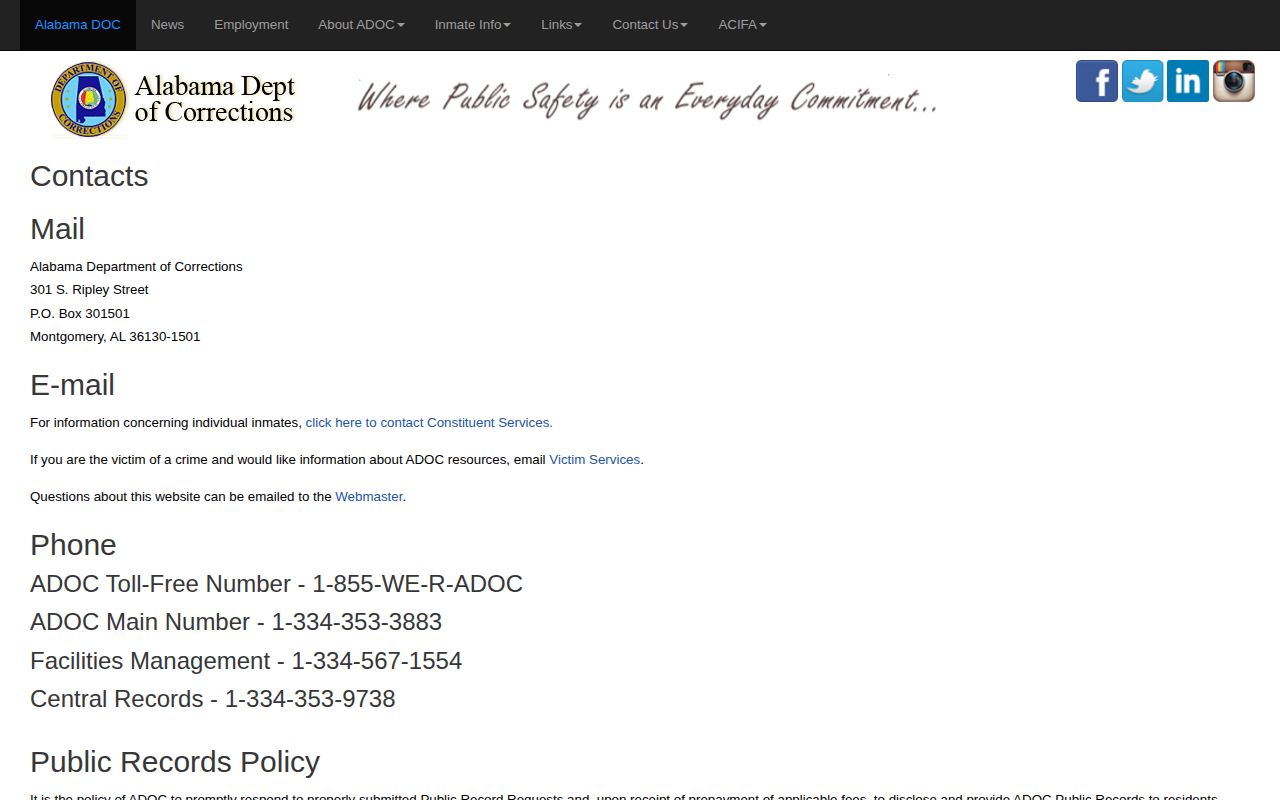
Use ADOC records for state prison release facts, then compare the record with the Sumter County sentence or transfer order.
ADOC Release Date Limits
A projected release date is not the same as actual release. Alabama release timing can involve correctional incentive time under Ala. Code Section 14-9-41, parole consideration under Section 15-22-28(e), and mandatory release under Section 15-22-26.2. A projected date can change because of sentence credits, credit loss, court orders, detainers, parole action, or administrative processing.
For more detailed timing rules, use Release Date Lookup. For state prison records that have dropped from the public search after discharge, use the written ADOC request path and the court sentence record.
ADOC to ABPP Supervision
When an ADOC release includes parole, mandatory release, split release, DUNK release, or probation supervision, the local Sumter County path is ABPP's Demopolis Field Office. ABPP hearing results can show grants, denials, reset dates, cancellations, or prior-year results, but a board result is not itself the full release record. ADOC processing and supervision setup still matter.
The ABPP parole FAQ explains set dates and eligibility. The set date is not a guaranteed release month. Check the ABPP Demopolis Field Office page for local supervision contact and the Post-Release Supervision page for parole and probation distinctions.
The ABPP parole FAQ is also useful when a Sumter County court sentence leads to state custody.
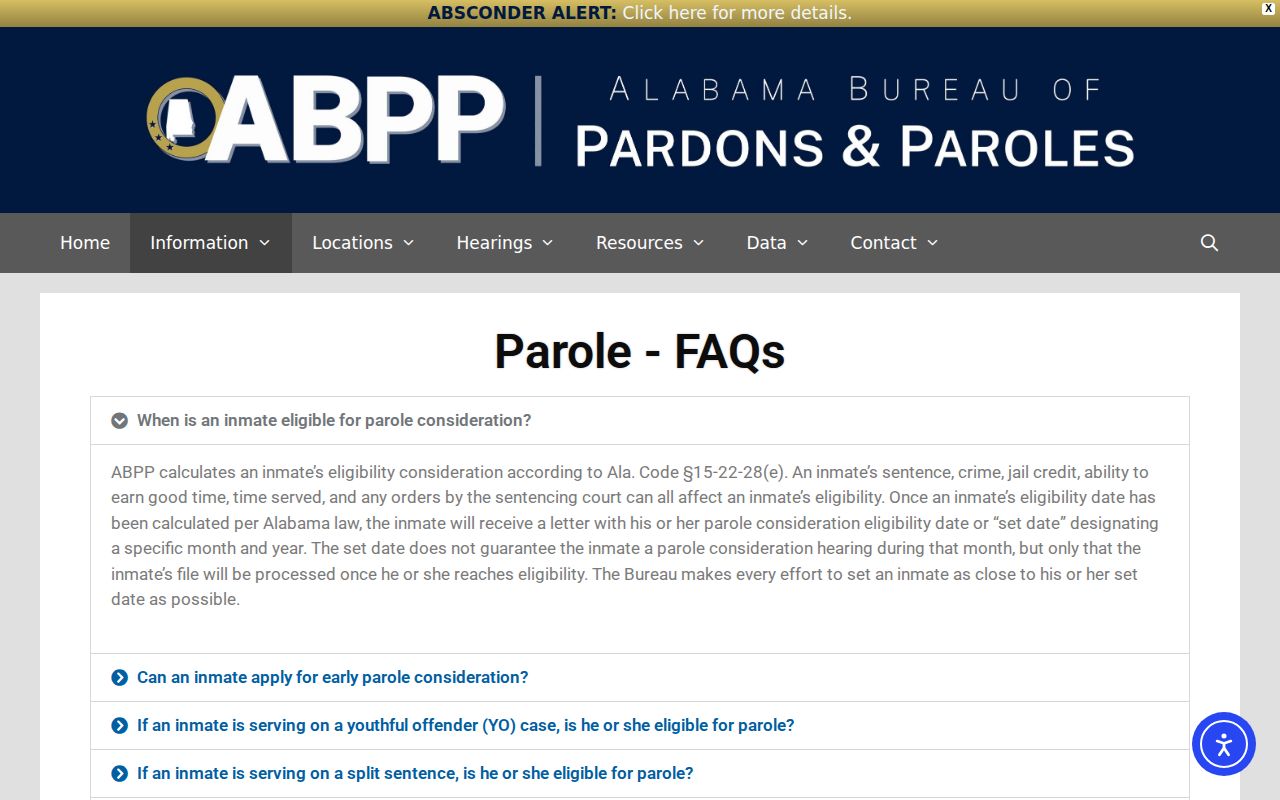
Read the FAQ with the ADOC record and court sentence, because each source answers a different part of the release question.
ADOC Is Not Sumter Jail
ADOC does not replace the county booking record. The Sumter County Sheriff's Office records county booking and release events. The Circuit Clerk records the criminal case and sentence. ADOC records state prison custody after transfer or sentencing. If a person moved from the jail to ADOC, all three sources may be needed to describe the path accurately.
For a county booking release, start with Sumter County Jail. For disposition and sentence authority, use Sumter County District and Circuit Courts.
ADOC Release Record Fields
A written ADOC request should name the existing record sought and give enough identifiers for Central Records to locate it. The research notes that Form 23-A asks for requestor information, inmate name, date of birth, full Social Security number if known, record description, proposed use, format, certification choice, and signature. For a Sumter County case, include the court case number or sentencing county when known.
Do not ask ADOC to create a new narrative. Ask for existing releasable records, such as a release or discharge record, central-record entry, time sheet, sentence-calculation record, or custody-status record. The regulation and form describe processing fees and possible production costs, and the research found conflicting fee language between older and newer references. The safest wording is to confirm the current amount with ADOC before sending payment.
| Field to include | Why it helps |
|---|---|
| AIS number | Separates same-name Alabama prisoners |
| Sentencing county | Connects the ADOC record to Sumter County court |
| Release or discharge date range | Targets the record without asking for a broad search |
| Record type requested | Identifies an existing releasable ADOC record |
When ADOC Shows Nothing
A no-result in the public ADOC search has limited meaning because the search is current-only. It can mean the person was released, never entered ADOC, is listed under different identifiers, or is in a different system. For a Sumter County sentence, the next step is to compare the court record with ADOC Central Records rather than relying on the public search alone.
If the Sumter County court record shows a state sentence, ask ADOC for the existing release or discharge record. If the court record shows probation without prison transfer, ABPP and the court may be better sources. If the jail record shows a federal or ICE transfer, ADOC is the wrong path. This prevents a state prison search from being used for county, federal, or immigration custody questions.
Sumter County ADOC Transfers
A transfer from the Sumter County Jail to ADOC should be read as a local release and a state custody intake, not as final discharge. The county release record can show the transport or transfer notation. The court sentence explains why state custody began. ADOC records then show the state-prison custody path, later discharge, or supervision handoff. Keeping those records separate helps prevent a county jail release date from being confused with a later prison release date.
When the sequence is unclear, request the jail release record first, then compare it with the Sumter County court sentence and the ADOC record. If ABPP appears after the ADOC term, use the Demopolis Field Office and ABPP hearing or result pages to understand supervision. A single search result rarely explains the whole path.
ADOC Record Boundaries
ADOC release records are strongest when the person was sentenced to Alabama state prison or transferred into state custody. They are weak for local bond releases, pending county cases, short county sentences, federal sentences, and immigration transfers. In those cases, the absence of an ADOC record does not resolve the question. It only shows that the state prison path may not be the right source.
For Sumter County, the cleanest record chain is court sentence first, ADOC custody second, ABPP supervision third, and county release record where the person left the local jail. If those sources conflict, use the date and agency owner to sort them. The sheriff owns the jail release date. The court owns the sentence and disposition. ADOC owns state custody. ABPP owns supervision status after release.
Public Record Search
Sponsored Results